Wednesday, January 27, 2010

The Tablet by Apple.


Apple and Jamaican tourism have something in common. The ability to grow when your competitors are contracting, even hemorrhaging. With Apple now officially a $50 billion company, their profits up 50% and the iPhone sales near 9 million they have shown that recession or no recession people want their digital wares from Cupertino, California.....bad! It is within this carefully crafted context that Apple is about to unleash the tablet today, January 27th. A date that seemed so far off a few months ago is now here. The hype has reached it's crescendo and I am reminded of that buzz you hear of musicians tuning their instruments and anxiety laced chatting in the crowd. This all ends when the conductor raises his baton. Mr. Jobs is about to waive his wand again and the press and the Apple fans are transfixed in another suspension of reality. We are plunged again into another techno-orgasmic escape of global proportions. Designed to drive their stock price even higher. Sigh...why didn't I buy that Apple stock in 2003.

There have been countless predictions regarding the tablet/iSlate/iPad whatever!?!?! But the ones that intrigue me the most are the following. Apple's partnerships with print publishers and the possibilities of the tablet as an input device. It was amazing to follow last year how the media covered numerous print houses that were crashing left right and centre as the Red Baron of the new digital reality shot them mercilessly out of the air. Remember the Napster days? Digital distribution was spear-headed by pimply-faced iconoclasts out to rule the world with gnarly code and a pirate server. Just like the music industry of yore before the iTunes store and Napster, the print industry was caught with their pants on the ground.

Last year, a very obvious tipping point for print was reached. Newspapers were folding (pardon the pun) all across the US. This accelerated Kindle lust and helped Amazon and others to sell e-readers like gangbusters. But Apple waited, biding it's time as they negotiated and secured contract after contract to enable their new product to be head and shoulders above the rest.

The tablet will create a whole new world for us content creators and designers. I can just imagine the next generation of children's books, sports magazines and the soon to be popular music LP that Apple introduced last year that I believe will transform our musical experience...again. As a designer, I am really looking forward to the input capabilities of the tablet. I think Wacom is going to suffer some serious losses over the next 2-3 years. It will not be pretty. They may have to shift to input wands and software for the tablet to stay in business.

One thing so many other pundits are not mentioning much of is that the tablet will not only be a platform for print media but also for Apple's twin juggernauts.

Apps and Music.

This is what the Kindle and the other players do not have. This One-Two-Three punch will really create the most sought after, life altering device since....fire. Either way, Apple is doing it again. Ol' Stevie is proving why he was chosen as CEO of the new millennium's first decade. It just goes to show that even if you get kicked out of the company that you founded there is always a chance for a second coming.

Thursday, September 17, 2009

Can We Reform Healthcare without Cost-Cutting

The short answer? No. (Read the article http://www.time.com/time/politics/article/0,8599,1917325,00.html). Aside from the hyperbole and exaggeration, we are a nation in trouble. Healthcare costs are crippling corporations and workers alike. Time for solutions instead of more fearmongering...or placating.

Most at risk are employees at the top of their pay ranges--generally people in the mid-40's to mid-50's. These are the people getting RIFed. They are also a decade or more away from Medicare eligibility.
Sent on the Sprint® Now Network from my BlackBerry®

ARRESTED: Raymond Clark III Charged With Annie Le Yale Murder


It's a story that captured our attention for the past several days. A graduate student, just days before her wedding, walked out of a campus building at Yale and vanished--only to be found, sadly, stuffed into a wall at that same building.

What we can't forget is that Ms. Le was a victim of workplace violence. If early reports have any validity, her alleged attacker (who worked as a lab assistant where she conducted her studies), spurned in his attempts to force her to operate in "his" lab the way he wanted, killed her.

My question to all of us is this: Are we certain that we're doing the work of screening workers and others who enter our workplaces for potential threats? Yale is in the heart of an urban area, but the threat to Annie Le came--not from random big city violence, but from within the university.

Thursday, September 10, 2009

Apple Adds Video to iPod Nano, Cuts Prices. New Phone in the Offing?


http://www.huffingtonpost.com/2009/09/09...
Apple has been known to cut prices in advance of a new offering, and with the holiday shopping season around the corner, insiders wonder what's coming down the pike. 

Are Consumers Paying Too Much for Text-Messaging?

Are Consumers Paying Too Much for Text-Messaging? That was the question posed by the Time magazine article I read this morning. With costs to cellular carriers being a fraction of a penny and billings to customers standing at roughly fifteen cents a go, it's easy to see that, for cellular carriers, texting is, well, deliciously profitable at 98%. What's troubling for carriers is the trend of consumers to dropping or scaling back plans, which has lead them to offer bundles with unlimited texting as a "teaser" to draw customers back (like the "loss leaders" for Walmart: prescriptions, shoe repair and so on).

Emerging from the back of the pack, for example, are carriers like Sprint, that are offering unlimited text, picture and video messaging along with 900 minutes for 90 bucks in a clear move to siphon off customers from Verizon, AT&T and T-Mobile. The churn in the cellular industry continues.

Monday, June 08, 2009

Sensitivity Training Gone Terribly Wrong

Many of you may know that I've lead a multi-division Affirmative Action and diversity initiative (why I have that white streak in my hair). "Sensitivity training" for the most part, left people scared of each other and tiptoeing around on eggshells.

So imagine how I giggled when I saw this.


Sensitivity Training - The best video clips are here

Sunday, June 07, 2009

Boards, Stockholders and Execs Gone Wild

The cascading systems failures in the mortgage, insurance, credit, automotive (stopping now...getting tired) industries has led us to a series of running postmortems to try to understand what went wrong--hopefully so we don't, well, do it again. In an article in today's New York Times, Roger Lowenstein has taken on an aspect of the economic debacle that has been largely overlooked: the role of stockholders. Here's a piece:

Let’s say you own a small business, maybe the local car dealership, assuming it is still extant. One day, you are feeling pinched and sell some shares of the business to a few folks in town. To keep things on the up and up, you create a board.

Every year you and the other shareholders get a report from the fellow you hired to manage the dealership. The business runs so smoothly you barely even think about it. Until one day, sales crash and profits, too. You would like to sell your stock, but it is in the tank. So you ring up the manager to see what happened. “Simple,” he says. “I quadrupled my bonus and I forgot to order a line of fuel-efficient cars. My bad.” Then he hangs up.

Feeling a little irritated, you try to contact some of the directors, but they are out driving gas-guzzlers that the manager supplied them and don’t seem inclined to return your calls. Now you are very irritated. As the biggest shareholder, you request that your name be included on the proxy ballot for the next election to the board. This the corporation refuses to do. Only the management (or its handpicked board) chooses nominees, and it is an iron rule of American corporations that ballots should not contain more nominees than seats. In the former U.S.S.R., this style of democracy endured for only 72 years. In American business it is timeless. Until last month, anyway, when the Securities and Exchange Commission proposed that shareholders who own at least 1 percent of the stock be able to nominate candidates to run in opposition to — and on the same ballot as — the slate offered by management. (Read the rest here)


The Compensation Gap Yawns
We've been having a pretty good time mocking executives with their huge salaries and giant bonuses. Truth is: as soon as we've moved on and the economy turns around, we'll probably go right back to the compensation structure we've known. We can't keep pretending that executives are solely to blame for bad business decisions and hefty rewards for failure. Truth is: HR wonks like me have been concerned about the canyon-like gap between executive compensation the salary/wages of the average worker. Just about 20 years ago, that ratio was 14:1. Now, amazingly, in the U.S., it's over 400:1. That might make some sense if corporate performance had increased by 28%; however, it hasn't.

"What did happen?" Now, there's a complex question. 
A piece of the answer is connected to the friction between the rank and file stockholders and executives selected to run companies. The long-held assumption was that stockholders would only think in terms of short-term returns while executives would plan for long-term gain. With the recent trend towards CFO as the feeder pool for CEO's and the anayst-driven mandates towards frequent restructurings, one wonders how much sense this has made--companies seem to be planning by looking in the rear-view mirror for the past quarter's (or worse, the past month's) results.

Stockholders are provided elaborate reports that provided them with enough information...to keep investing. With the moves towards simplification in credit and mortgage documents, I can only hope that this trend will extend to the quarterly and annual reports, so that they can be easily read and understood by people who didn't get their degrees in accounting and finance. And those nominating slates for board members? Well, there's no democracy there. Stockholders are only supplied enough names to fill those empty seats and not a single name more. The SEC is now considering a policy change that will allow stockholders with 1% or more to add names to the board ballots. Good luck with that.

Another element is the composition of the Executive Compensation committees on most boards of directors. Committee members, who design the system of salary and perks that are supposed to spur a leader's best thinking and keep him or her interested in staying are, well, other leaders and corporate board members. In a sense, what has happened is that they've been voting to incrementally and inexorably raise all boats.

The Business Roundtable, a powerful lobby of corporate CEO's has shifted from their 1970's mandate to serve the interests of customers, employees, stockholders and the communities in which they operate to a single focus: making money for the stockholders, with an eye to ruthlessly reducing expense (read: employees). This shift had lead many thinkers in the areas of leadership and compensation to wonder whether it's infected our corporate goal-setting process with a "profits or perish" mentality. For example, in the 60s, then-Ford CEO, Lee Ioacocca gave marching orders that would prove both incomplete...and deadly:

Faced for the first time with competition from low-cost, high-mileage foreign imports, Iacocca set a specific target: Ford would design a new automobile that weighed less than 2,000 pounds and sold for under $2,000, and it would be on the showroom floor in time for the 1971 model year. What resulted was a mad dash to create the Ford Pinto.
The rush to roll out the Pinto had lethal consequences. Common-sense safety checks took a backseat to meeting Iacocca's deadline. In particular, engineers failed to examine the decision to place the Pinto's fuel tank only 10 inches behind the rear axle. When the Pinto was rear-ended, it often went up in flames. Fiery rear-end crashes caused 53 deaths, numerous injuries and a string of costly lawsuits. (Read the rest here)
Overly ambitious goals and overly generous compensation: A heady mix.

Now, maximizing stockholder wealth means something quite different when considered against the enormous stock offerings made to corporate execs...and the shift in comp and benefits mix in the last 30 years (from Big-C cash plus stocks to little-c cash plus Bis-S stocks to Big-...um, everything). I get how challenging this is...vesting of stocks is a dicey thing: execs are taxed on the value of the stock when issued--not when vested and received. And stock values have been known to crater to zero in just weeks, leaving execs to jockey for more up-front money as a hedge against stock volatility.

Noted economist, Milton Freidman, in the '70s opined that stockholders would keep companies moving in the right direction. Milty didn't however, anticipate profit-sharing and stock ownership plans for managers on down to key employees or even ESOPs (employee stock ownership plans).

What a hot mess.

Monday, June 01, 2009

GM, Gone as We Knew It

Reading Michael Moore's account of the GM bankruptcy announcement from "GM town," Flint, Michigan (with over 40% of its workers employed by GM), I'm reminded of what it was like to work for R.R. Donnelley &; Sons in Crawfordsville, Indiana, when they announced a 70% reduction in force. Donnelley was the major employer and when it shed over 3.300 jobs in a town of 13,000 it landed with the force of a tsunami. Moore writes:

It is with sad irony that the company which invented "planned obsolescence" -- the decision to build cars that would fall apart after a few years so that the customer would then have to buy a new one -- has now made itself obsolete. It refused to build automobiles that the public wanted, cars that got great gas mileage, were as safe as they could be, and were exceedingly comfortable to drive. Oh -- and that wouldn't start falling apart after two years. GM stubbornly fought environmental and safety regulations. Its executives arrogantly ignored the "inferior" Japanese and German cars, cars which would become the gold standard for automobile buyers. And it was hell-bent on punishing its unionized workforce, lopping off thousands of workers for no good reason other than to "improve" the short-term bottom line of the corporation. Beginning in the 1980s, when GM was posting record profits, it moved countless jobs to Mexico and elsewhere, thus destroying the lives of tens of thousands of hard-working Americans. The glaring stupidity of this policy was that, when they eliminated the income of so many middle class families, who did they think was going to be able to afford to buy their cars? History will record this blunder in the same way it now writes about the French building the Maginot Line or how the Romans cluelessly poisoned their own water system with lethal lead in its pipes.
Moore insists, like others, that GM refused to build fuel efficient cars American drivers wanted to buy. I don't agree. Following Moore's train of thought, the roads would have been filled with SmartCars and Priuses (Prii?). Instead, we kept buying cars with gas mileage ratings that were nothing to boast about even in the 1980's. Like that chestnut from Richard Pryor (scrubbed for sensitive readers): we ordered poo, so we had no choice but to eat poo (not the same punch as Pryor).

The UAW, management and shareholders were locked in a zero-sum game of Money-Money-Money, with the workers wanting higher wages even when the company, feeling the strain of competing with foreign-based manufacturers making cars in the US making for a fraction of the comp/benefits costs; top management demanding enormous compensation packages despite company results; and shareholders, in the age of Googlized (inflated like Octo-Mom's lips) profits, revolt-ready if profits fell.


There are several things I'd love to see GM take with it to the dustbin as it regroups. GM had one of the most byzantine HR systems to be found anywhere. Now, sweeping and immediate changes are in the offing, regardless of the direction their Chapter 11 filing:
Some retiree benefit obligations to be reduced by roughly two-thirds; hourly staff will hit 38,000 by 2011; salaried workforce to be trimmed to 23,000; and the number of dealers will drop to 3,600.  
Um, wow!

Human Resources at GM seemed skilled at figuring out how to line up employees in a orderly dance, even when profits fell below their historic highs. Called "Generous Motors," GM was known for high wages and lucrative comp deals for execs. However, in promising the moon in terms of retiree health and pensions in order to help keep salaries lower (yipes!), even when moving jobs offshore, it set itself a Sisyphean task. This from the Washing Post (H/T FiveThirtyEight.com):

GM began its slide down the slippery slope in 1950, when it began picking up costs for medical insurance, pensions and retiree benefits. There was huge risk to GM in taking on these obligations -- but that didn't show up as a cost or balance-sheet liability. By 1973, the UAW says, GM was paying the entire health insurance bill for its employees, survivors and retirees, and had agreed to "30 and out" early retirement that granted workers full pensions after 30 years on the job, regardless of age.

These problems began to surface about 15 years ago because regulators changed the accounting rules. In 1992, GM says, it took a $20 billion non-cash charge to recognize pension obligations. Evolving rules then put OPEB on the balance sheet. Now, these obligations -- call it a combined $170 billion for U.S. operations -- are fully visible. And out-of-pocket costs for health care are eating GM alive.
Retirement plans have historically been based on an actuarial formula that "works" for employers when retirees die within 2-5 years of retirement. Having retirees leave the company at as young as 48 (in their "30 and out" system), they stood to pay retirees and their mates for decades beyond the usually and customary (and grisly) benefits and comp formula. This report from Boeing shows a bit of what I mean:


Early retirement, as Boeing found, proved to be too costly, though there is some suggestion in the literature that early retirements have a greater illness and injury relationship. If that is actually the case, the new GM should focus more on wellness care and job design that takes a dramatic swipe at the possibility of injury.


We'll see.

Thursday, May 28, 2009

We Just Don't Have the Words...

I'm an HR wonk. I admit it. I love looking at the systems and strategies that have people be successful at their work. So, I admit that been concerned for quite some time that we no longer have the words to describe what we're doing.

"Layoff," a term that historically referred to hourly workers for whom there was not enough work and who had to be furloughed until worked picked up, no longer means what it used to. Now, due to administrative/legal alchemy, we use "layoff" to describe workers who continue to receive continued benefits and "salary" from a different budget "pot" that takes them off the books as a active employee, then "voluntarily" accedes to be separated from the company should there be no job for them to return to.

Of course, at no time is the employer looking for a new job for a RIFed worker.

Friday, April 10, 2009

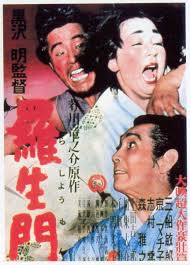
Biz Failure and The "Rashomon Effect": Bring Out the Pies!

My "little" brother (6'2" and 225 lbs) is a constable on patrol (actually, now a Sargent responsible for training and development) in our home town. Talking with him one day about how people process information, he remarked that sometimes the most challenging thing an officer could encounter is an crime scene with several witnesses, each with their own point of view on what "really happened."

I think about that long-ago conversation, sometimes, when speaking with management and leadership teams. Their take on what went wrong and what caused it can, at first, sound quite a bit like the wind-up for a Three Stooges pie fight...only without the pies.


Like the "Rashomon Effect" Perry and I were talking about (based on the amazing Kurosawa movie--think CSI: Feudal Japan in which people posit plausible, but differing accounts of events), blame-shifting and the regrettable inability to parse "what's so" based on the limits of perspective can surely hamstring a team looking to make a quick shift.

See how nicely I said that?

Even more troubling is the tendency of people to cling to their account of events...all the way to the bitter, hopeless (pieless) end.

  • It was those people HR hired!
  • If accounting could have given us better numbers...
  • The IT people can't program worth a damn!
  • I blame Bush, the economy, the Chinese, global warming.
  • (in sotto voce: it was the CEO's fault!)

What's powerful is the realization that no one "owns" The Truth (said with gravitas)--not even the CEO, who only knows what he or she sees...and little of that with absolute certainty. Even more powerful is the ability to put together a "workable truth" with enough facts with which to make decisions and enough flexibility to quickly shift as more information becomes available.

Good Friday? How About Great Friday!

At Tea's Me Caf e in Indy having tea, listening to great jazz & getting things done?

This message was sent using the Picture and Video Messaging service from Verizon Wireless!

To learn how you can snappictures and capture videos with your wireless phone visit www.verizonwireless.com/picture.

Note: To play video messages sent to email, QuickTime� 6.5 or higher is required.

Monday, March 30, 2009

Chrysler Head to Resign While Chrysler Urged to Take Fiat Deal

In a move that may just be window-dressing, the White House has urged GM CEO Rick Wagoner to resign and Chrysler to take a proffered deal with Italian auto maker Fiat in order to receive any additional bailout bucks. This from the New York Times:

The decision to ask G.M.’s chairman and chief executive, Rick Wagoner, to resign caught Detroit and Washington by surprise, and it underscored the Obama administration’s determination to keep a tight rein on the companies it is bailing out — a level of government involvement in business perhaps not seen since the Great Depression.
With Mr. Wagoner having been at the helm for almost a decade, it's clear that he's had ample opportunity to shape the thinking of other executives at GM--his thinking is part of their "DNA." What I find troubling is that there is no mention of the organizational change effort needed to re-shape their thinking (or, failing that, the need for additional blood-letting).

I'm certainly going to keep watching as the dismantling of the old leadership paradigm further disintegrates.

Thursday, March 19, 2009

Does the nature of our communication need to change to maximize social networking opportunities?

I posted this question on LinkedIn and thought I'd expand and cross post it, expanded here.

Social Networking. All the rage. However, I'm wondering whether Web 2.0 is really something more like what I've termed Relationship 1.0 (See me! Buy from me!) on a new platform.Given our opportunity to connect with people the world over in an instant, would we be best served to focus a little more attention on the kinds of communication (who or how we need to be or whether we're powerfully "in the world" of another) that works best on these and other platforms (including face to face).

Social network theories originated in sociology, social psychology and anthropology (imagine that) and, at their heart, describe the manner in which people connect. In 1954, J. A. Barnes started using the term systematically to denote patterns of ties between and amongst people, institutions and social groups--social networks. What, I wonder, would happen if those experts--"S.D. Berkowitz, Stephen Borgatti, Ronald Burt, Kathleen Carley, Martin Everett, Katherine Faust, Linton Freeman, Mark Granovetter, David Knoke, Peter Marsden, Nicholas Mullins, Anatol Rapoport, Stanley Wasserman, Barry Wellman, Douglas R. White, and Harrison White" (from Wikipedia.org) told us whether our use of electronic social media to create networks was really allowing us to create lasting connections with some velocity and effectiveness or just ersatz biz and personal links.


For example one theory talks about social distance--the nature of the comfort zone between people who are identified as different from one another (in terms of, for example, race, gender, nationality, sexual orientation). The Bogardus Social Distance Scale for example, uses a scale (below) where 1.0 would indicate no distance (or opportunity for difference-related friction).
  • As close relatives by marriage (score 1.00)
  • As my close personal friends (2.00)
  • As neighbors on the same street (3.00)
  • As co-workers in the same occupation (4.00)
  • As citizens in my country (5.00)
  • As only visitors in my country (6.00)
  • Would exclude from my country (7.00)
So. a Facebook "friend" or Twitter follower from another country may have a SD rating of 7.

Now,taking that a bit further, given what I'm trying to track, I wonder if there are other values to add to the scale to describe the vector point of the connection--what "source" the connection came from or the Connection Distance. Like this:
  • Connected with them directly (score 1.0)
  • Connected with them through a close friend or partner (score 2.0)
  • Connected with them through a business or professional associate (score 3.0)
  • Connected with them through an associate (score 4.0)
  • Connected with them through a stranger (score 5.0)
  • Not previously connected at all (score 6.0)
Could these two elements--Social Distance and Connection Distance--covary? Probably so, though I'm guessing here. What I'm reasonably sure of is that there's a hell of a lot more work to be done to understand these connections and be able to measure their autheicity, depth or value.

Just sayin'!

Friday, February 13, 2009

Starbucks Nixes Fixing Decaf after Noon

If you're like me, you spend a fair bit of time at SBX for business networking, relaxed client meetings or to "change your air" while working on a deadline. So, I was surprised to see that Starbucks felt if necessary to stop preparing pots of brewed decaf in the afternoons. Seems that tossing the unused brew when it's a ripe 30 minutes old was getting costly.

Wednesday, January 21, 2009

On Pepsi's New Branding....

Pepsi Bottles


I can see why so many people dislike the new Pepsi logo. Yes, I too
quivered when I first saw it. Yup they are famous for constantly
changing their branding and all that but a lot of the argument I think
needs to go deeper. Pepsico knew this backlash would happen. They knew the new design would not bode well with a wide swath of their drinkers but the “what” is not the question, it’s the why.


After taking a long hard look at the logo my guess for why they did it is this.


Yes there will be heavy online buzz (including this post) but this logo was not designed for the NOW,
it was designed for the future. Current context is not it’s focus. This
logo was designed for a future zeitgeist. A theme, a style, a mode of
thinking…not yet popular. When a company of the size of Pepsico
redesigns their branding as often as they do, they have come up with a
design that is projected from their future to the now. it cannot be
defined by not current tastes.


They do this not just for design longevity’s sake, but also
packaging purposes. If this new branding is to carry them through the
next 10, 15 or 20 years it allows them to project packaging costs much
better. For a company the size of Pepsico these projections can make or break their bottom line.


Think about it.


If they design a logo that is more concurrent with today’s
design language or thinking and it gets stale in 3 - 5 years, that is
going to be millions of dollars lost
for the company’s that
produce their packaging, and in turn Pepsico, because it will represent
a massive retooling for these guys because of the sheer volume of
printing and production that goes into the packaging process. So for
me, that is the why. The design will slowly grow on us and it will soon
seem ahead of it’s time….. no I take that back. That’s probably what
the Pepsico board is betting on.

Friday, January 16, 2009

Beauty all around

At the falls in a Tennessee state park.

This message was sent using the Picture and Video Messaging service from Verizon Wireless!

To learn how you can snap pictures and capture videos with your wireless phone visit www.verizonwireless.com/picture.

Note: To play video messages sent to email, QuickTime� 6.5 or higher is required.

Monday, December 15, 2008

"Trouble Don't Last Always": Mother Wit for Tough Marketing Times

Erik Deckers over on Twitter shared this link with me earlier today. Here's a taste of the article (a quick and good read):


Good news for marketing agencies, printers, and direct mail companies from B2B Marketing magazine. According to their “exclusive” survey, only 25% of all business-to-business marketers are going to cut their budget. But nearly one-third of them are actually increasing their marketing budget, while another 44% are leaving them intact. That’s good news for anyone in TV and radio advertising, digital marketing/advertising, and, of course, direct mail.

As I’ve been speaking to other marketing professionals around Indianapolis, they’ve all been saying the same thing: marketing spending is staying flat or increasing.

Increasing? In a down economy? Absolutely.

That may seem counterintuitive to some, especially the bean counters, but spending more on marketing now is smart. That’s because the 25% of marketers cutting their spending are your competitors. They’re hiding with their heads in the sand, which means their message isn’t reaching customers, which means customers aren’t buying, which means income is shrinking, so they bury their heads a little further. (Read on)

Here's what I offered as a comment:

Right on! I'd also add R&D and strategic planning. Here's why.

My Great Grandmomma was a woman from the American South who came North to escape the oppression of Jim Crow and find economic opportunity. Not educated past the 6th grade, she was filled with what the old folks used to call "Mother Wit," a kind of smarts that can't be taught in school. Momma Lena would look at the times we're now living in and remind me that "Trouble don't last always." She'd tell me to do everything I could to get ready for my blessing, adding "be ready to be found." That last bit was in her attempt to get me married off (Momma Lena, my Hubs is a marvel and I'm sorry you never got to meet).

Now, my spiritual path is one that this church-going lady would scratch her noggin hard over (I call myself a BaptiBuddhist Yogini), but her message keeps ringing in my head as I talk with fearful clients.

But, I digress: This won't last.

If we continue to freeze our spending completely, when the clouds pass, we'll be left in the ditch...by those companies that invested in (wait for it...wait for it...) marketing, R&D and strategic planning.

We see examples of firms that invested deeply even when they didn't have the sales figures to back up that investment.

A few years ago, when Apple's sales were sluggish and their customers spoke hushed tones about the Apple gospel of "not a PC," they invested--mightily. They learned more about themselves, their customers and the market. They created new products there weren't even names (or desires) for yet. They studied trends and created a few of their own. They created knowledge centers and centers of learning for customers and employees. They crafted their message. They created communities and systems in which those communities could interact. They cemented their brand. They became evangelists.

Apple and many other companies have succeeded by not giving in to scarcity and fear, but this says more about their strong, adaptable culture than, perhaps, anything else. That company's marketing systems are built to flex. Having gone up against the Microsoft Machine since their inception, they're accustomed to being the underdog with far less in cash reserves than their Redmond-based cousin.

That means that they had to get smart in whole new ways. Having proven that they could build a brand, largely, by word of mouth, they used their Mother Wit to design marketing systems that grabbed the attention of their customers--both those present customers and those who would have never thought to buy anything from Apple. We all know people who own PC's and iPods or iPhones, or shop at the iTunes Music Store.

I do think, however, that spending the same money on the same things is a no-go. The markets are fluid, malleable things. During this downturn, companies can--and should--be taking a close look at their knowledge systems (training, R&D, etc.) for ways to beef-up knowledge sharing and folding new learnings into development. Companies can also be looking (as they should have been along) at who their customers are, what they want, how they want to get it and how they want to be interacted with.

In short, this downturn is a "teachable moment," speaking volumes about continuous improvement in marketing, communication, product design, planning and execution--all the systems that make up a company.

The statement in the post about nonprofits and not cutting marketing or mailings is pretty brilliant. The recent presidential campaign is a testament to the power of marketing and of the creation of new, flexible systems for communication of messages to customers (in the political sense, voters). These nonprofits (Obama, Clinton, McCain, Romney, etc. for President) told us quite a bit about scalable messages and scalable marketing systems. And let's not forget, while the Obama campaign was raising money by the semi-load in its last month, we had already been in a recession for the better part of a year!

Tuesday, December 09, 2008

Relationship 2.0

Web 2.0: The Architecture of Interaction
Web 2.0. It's a term we all know because, in fact, its existed along with the earliest elements of the World Wide Web, and includes social networking, co-creativity, collaboration and sharing. That means that social networking sites, wikis, blogs and other syndicated content were foretold in the creation of the Web.

Like Eric Schmidt famously said: "Don't fight the internet." Instead, he suggested using the power of the web as a platform for business and social interactions--an "architecture of interaction." That challenged me to use my website as more than just a web-based business brochure. And I've still got more north to go.

Relationship 1.0: Gaming the System
I love every single bit of electronic social networking with one caveat: I'm not sure if I'm all that interested in Web 2.0 if all we do is bring Relationship 1.0 to the party.

We all know the elements of Relationship 1.0. You can find them at every "networking event," for example, with people in a death match where the object is to (1) sell something to someone rather than connect, (2) figure out what can be gained rather than given and (3) promote a homunculus of oneself and never the authentic you. Extra points for having taken a class on smiling and handshakes (don't laugh, because they're out there). Then, dash home to add all those names to your newsletter mailing list and send out all of those "special offers" to buy your merchandise. If they didn't want you to send them endless stuff, they wouldn't have given you their digits. Right? Not according to the CAN SPAM Act (which arose because of internet abuses).

Trouble is: no one who goes to networking events goes looking to become your next customer. They went hoping you'd become their next customers. Trust me. I get to do my fair share of public speaking: I've asked.

Learn About You? I'd Have to Care
Twitter automation through services like Tweet Later are compounding the problem. Designed to help people manage their welcome and other tweets, these services are leading to some curious situations. For example, I routinely get welcome messages from other coaches asking me to join a teleclass or webinar or sign up for a free coaching session. I've been coaching for almost 18 years. Clearly they haven't read my bio. Now, I understand that having large numbers of followers, it can be tough to read the bios of every new follower, crafting a welcome message to each. And truth telling here: I use an automated welcome message service (I get sometimes 30 new followers a day and want to thank them for following). What i have found that works, is to click back through recent additions and sending a response to one of their more meaty tweets to let them know I'm listening. Also, I read profiles before I re-tweeet (forward a tweet) or reply the first time--just for context.

Follow Me, Follow You
There's quite a bit of strange controversy surrounding whether it is noblier in the web to follow people who follow you. Twitter notables like Guy Kawasaki suggest you're a lose if you don't. But that would mean, in Web 1.0 terms, that you would have been obliged to put everyone on a newsletter mailing list who put you on one. If Twitter users had to pay for the followers by level, there would be less of that nonsense going on. Like the book says, (they) just might not be into you. But that doesn't mean you can't be into them.

Relationship 2.0, then, is about the birds in the bush and not those in the hand--about connecting people to our connections. About paying the richness of our lives and relationships forward.

Think about it when you get (or give) that next self-serving tweet about that next business offer.

An Open Letter to Obama on Small Biz

Just sent off a happy gram to the good people at Change.gov about small business. Here's what I said:

Small business is the engine that drives the economy, but the government has had little real focus on small business development in years. Multiple heads of the SBA in the Bush Administration, little in terms of money and talent. Little commitment. Now, we see the erosion of small business and the very agency tasked to support business growth is struggling for its own survival.

If the SBA was a small business, they'd be having their own fire sale.

Here's my coaching for you: Transform the Small Business Administration and appoint a new Director--fast!

SBA Scope
The scope of the SBA is too broad to help all of the very diverse business needs: non-employee microenterprise small businesses (0 employees), microenterprise small busineese (1-10 staffers), small-small businesses (10 - 50 or 75), small companies (75 - 250 employees) and larger small businesses (250 - 500 people).

Right now, with very little resources and scant support, they are tasked with job creation. There's little time, energy or resources for anything else.

REQUESTS

SCOPE
Divide up the SBA into business support segments (as described above). Given the fact that there has been shrinkage among non-microenterprise small businesses (something like 12% over the past half dozen years and dramatic growth among microenterprise (especially non-employee micro-e businesses), where are some inescapable facts: we can't afford for these businesses to fail (and add more job seekers to the tightening job market) and these businesses fill an important role in America.

Create an office of microenterprise small business soon, lest these businesses disappear.

SCORE
While I am sympathetic to the plight of new businesses, I am also cognizant of the fact that with its reliance on SCORE rather than existing consultancies, the federal government has set itself up to compete with some of the very small businesses they are there to support.

Further, the SBA is training business leaders that the services of consultants should be cheap or free. They never learn that as their businesses grow, their needs for more advanced business consulting and support services grows as well.

HR
Finally, I find it shocking that the SBA does not offer specific HR services and consulting to the businesses they support. With all eyes on the meltdown over executive compensation, union wages and other weighty human resources matters, I can't help but wonder whether the SBA is enabling the next generation of businesses to overpay execs, exploit workers, and hobble themselves with comp and benefits decisions they should (1) never have made and (2) would have made differently with specific counsel.

Thanks for listening.
Best,
Lalita Amos, MRHM
Total Team Solutions, LLC

Tuesday, December 02, 2008

What the Hairy Heck?

I was still chewing on this blog post over a week after I first read it, so I thought I'd chew it over with you. In it, the author described the travails of a consultant who'd had his gig pulled right after he'd made the cross country move.

Michael Moses landed a job as a human-resources consultant in Chicago straight out of college. He moved to the Windy City from New York, signed an apartment lease and was ready to work. But then he got a call that more job hunters have been dreading—the company could no longer afford to hire him. ‘I was ready to go, and they just pulled the carpet out from under my feet,’ says Mr. Moses, who is 22 years old.
What bothered me about Mr. Moses' account of losing a job he actually started was the job he was being hired for. And while he doesn't mention what his degree was in, it stands to reason that at 22, it wasn't a Masters of Phd and that he didn't have the depth of experience most people think of when they think: consultant.

(sigh)

Hiring managers have to do a better job of considering talent. "Growing people" in a position seems like a smart idea, except when I consider that most companies are trying to get cheaper employees, hoping that they'll get the experience they need quickly. Besides, these workers, as Mr. Moses can attest to, are easily shed.

Our current job market shows a lot of daylight in this strategy.