Showing posts with label Not Like the Rest. Show all posts

Wednesday, November 12, 2008

Miriam Makeba, Mama Afrika (a tribute)

I was very small when I first heard Miriam Makeba. I'd come downstairs early one morning to see my mother putting on some music to jam to while cooking, cleaning and doing laundry. Momma danced through the house all day and when I asked her what the songs meant, she said she'd gotten the records from Sophia, a South African student who was studying at Purdue, just across the river. We'd ask her next time we saw her.

Sophia was like nothing and no one I'd ever seen--she was tall (or so she seemed to me at 8), mahogany, had a melodious accent, wore thread and beads in her long hair and was a refugee. Since the 1960's the South African government had been rescinding the visas of traveling students and others. Effectively, she and the others in her little contingent, were exiles.

Sophia brought us Hugh Masekela and Miriam Makeba. Momma brought Sophia Herbie Hancock and Miles Davis. What an exchange.

Our little house in that newly-integrated neighborhood (that would be us) was filled with people, music and foods from around the world.

Though it was that day I spent with Sophie--she was teaching Momma how to do my hair South-African style (in little semi-rural Lafayette, Indiana!) that I found out what Ms. Makeba was singing about. Her songs were about rural life there. They were about the evils of apartheid. They were about a deep love of Africa...about Zulu life. Sophia would say "here, she's saying 'Momma hurry. Don't let the Afrikaner police catch you!'' and "here she's singing a wedding song. Can you say the letter ! (the symbol for the click)." And my mother would pass her more beads and thread.

Ms. Makeba has suffered greatly before and during her exile. Before leaving South Africa, she and her band mates had been in a terrible accident with another car. The emergency medical personnel only helped the whites. Ms. Makeba's Black South African friends were left to die on the side of the road.

Human road kill.

Years later, she would return to South Africa a heroine. Nelson Mandela persuaded her to return after his release. He wrote this, in part, of her passing.

Her haunting melodies gave voice to the pain of exile and dislocation which she felt for 31 long years.

At the same time, her music inspired a powerful sense of hope in all of us. (read the rest)

So, when I heard that Ms. Makeba died on Monday while singing in Italy, I pushed back my desk chair and listened quietly to the retrospective on her life. And remembered...dancing through Momma's kitchen, singing songs a far away woman had taught me to sing, with beads clicking in my hair.

Wednesday, July 30, 2008

Not My Fault. Oh?

We've all heard this sorry chorus (and if we put on our Big Boy/Big Girl duds, we can admit that we've even said things like this):


  • That's wasn't my job
  • The customer didn't get me the information I needed
  • I was drunk, but I wasn't the cause of the accident
  • My hard-drive failed
  • I have a slow metabolism
  • It was the traffic
  • It wasn't me.
We belong to a culture of decreasing accountability.

That's why this episode of This American Life stopped me from my Saturday night's reading. When he was 18 years old, Darin Strauss, author of Chang and Eng and More Than It Hurts You, killed a girl. He was driving--sober and straight--along a highway when she swerved her bicycle into the path of his car. There was nothing he could do to save her. He describes his "stomach-turning" behavior at points where he was more concerned about himself--how he might appear--than about the girl the car he was driving struck.

While there was nothing he could have done, Darin's story repeats this refrain: "the girl I killed." He's clear that, while her bike turned crisply into his lane, he was piloting the car that intersected with her and her bike. He was responsible, as the instrument of her death.

Life has become about "who did it" and "who's to blame," with biz owners, executives, sales reps, technicians, husbands, politician, and children taking sometimes draconian steps to avoid blame...or, better, to shift it to someone else. Jack Welch was lionized as a "genius" for his competitive stance "Be first or second in the market or begone." The detritus of Jack Welch's turn at the GE rudder gave us "rank and yank," an "HR system" based on the Vitality Curve wherein the top 20% get raises and promotions, the bottom 10% get the door and the middle 70% get to keep their jobs. To keep your job, one would have to be either in the first or second ranking. Those on the third rung are dispatched, regardless of their contributions. After several iterations, GE professional and execs, speaking privately, of course, have said that the chorus of "it wasn't me" is deafening, as people struggle to look better than their neighbor as the strongest players in the industry compete with their equally-stellar peers. The workplace culture has become increasingly toxic, with less collaboration, sharing of knowledge assets and mentoring? Who would want to be mentored if that mentor could "turn state's evidence" and become party to one's termination. HR staffers, under Welch's system, were reduced to ranch hands who conducted the annual culling.

I remember a course I took some years ago that served up a brutal take on responsibility. "Responsibility," they said "begins with being 'cause in the matter' of one's life." Here's the entire quote:


Responsibility begins with the willingness to be cause in the matter of one's life. Ultimately, it is a context from which one chooses to live. Responsibility is not burden, fault, praise, blame, credit, shame or guilt. In responsibility, there is no evaluation of good or bad, right or wrong. There is simply what's so, and your stand. Being responsible starts with the willingness to deal with a situation from the view of life that you are the generator of what you do, what you have and what you are. That is not the truth. It is a place to stand. No one can make you responsible, nor can you impose responsibility on another. It is a grace you give yourself - an empowering context that leaves you with a say in the matter of life.
-Werner Erhard
Claim no responsibility? You're a victim and have admitted that there's nothing that can be done.

Rubbish.

As a result of my participation in this program (drank the Kool-Ade as with a protein shot), I don't offer excuses--really stylized cover-ups--which are about me rather than a sincere apology and offer to make it right, which is about the person I'd fallen short with. No one has ever cared about my excuses and--here's the money shot--most of those excuses could have been avoided.

  • Not your job? Tell the boss that there's a gap in the job design rather than letting it be a surprise.
  • Missing customer info? Tell them so and that you won't be able to get then what they need in a timely way
  • Drunk and talking to the police? Suck it up and blow, hard, into the Breathalyzer
  • Hard-drive failure? Set up that backup you've been talking about and pretending wasn't a priority
  • Got a slow metabolism? Move!
  • Heavy traffic and you've got a meeting? Leave earlier. Most of us in Indy know where the trouble spots are on I465. Traffic is just an excuse.
  • Not you? Who else, then?

In an instance I got to hear a leader take responsibility back. Their company had deleted my text messaging ability, then my picture messaging, and finally -- Poof! -- there went my ability to make phone calls. After serveral calls, several reps and several hours, it was finally corrected. Then, I got a call from those people's manager. He had listened to recordings of the calls I'd made and was completely chagrinned: "That's not the kind of service we're committed to." He said, baldly, "We dropped the ball and sucked up a whole lot of your time" and promised to retrain his staff and to credit my plan for the days of lost service.

I was so stunned I couldn't speak.

Full Episode: Darin's piece is about 9 1/2 minutes into it.

Friday, July 25, 2008

Randy Pausch, Author of "The Last Lecture," Has Died at 47

Randy Pausch, Carnegie Mellon professor of computer science died today of pancreatic cancer at 47. He died in Virginia, having insisted on moving so that his wife and children could be closer to beloved family members after his death.

His academic achievements are many--he was co-founder with Don Marinelli, of Carnegie Mellon's Entertainment Technology Center and started the Building Virtual World course which he taught for a decade. He was a National Science Foundation Presidential Young Investigator and a Lilly Foundation Teaching Fellow and did sabbaticals at Walt Disney Imagineering and Electronic Arts. He authored or co-authored five books, including the book, The Last Lecture; over 70 articles and was the founder of the Alice software project. He topped the list of the World's Top-100 Most Influential People (Time magazine).

Aside from his academic credentials, his relationship with his wife, Jai, and his children, his other crowning achievement was his entry for Carnegie Mellon's Last Lecture series, "Last Lecture: Really Achieving Your Childhood Dreams." In August, 2006, he was diagnosed with pancreatic cancer, a mean-spirited disease that is both pitiless and merciless as it eats up the life of the person afflicted with it. By August, 2007, he was told that it had mestastisized and that his time was short. Instead of putting his affairs in order and going on his last vacation, he went to the classroom. Here's his lecture.

Watch it, get your hands on the book, plaster on a broad smile about the beauty of your dreams and then get to work.

Some of my fave nuggets from The Last Lecture:
  • "The brick walls are there for a reason. The brick walls are not there to keep us out; the brick walls are there to give us a chance to show how badly we want something. The brick walls are there to stop the people who don't want it badly enough. They are there to stop the OTHER people!" — from The Last Lecture
  • "...when you see yourself doing something badly and nobody's bothering you to tell you anymore, that's a very bad place to be. Your critics are the ones telling you they still love you and care." — from The Last Lecture
  • "Experience is what you get when you didn't get what you wanted." — from The Last Lecture
  • "It's not about how to achieve your dreams, it's all about leading your life. If you lead your life in a right way, karma will take care of itself. And dreams will come to you." — from The Last Lecture
  • "We're not going to talk about spirituality and religion. Although I will tell you that I have experienced a deathbed conversion. I just bought a Macintosh." — from The Last Lecture
  • We cannot change the card we are dealt, just how we play the hand." from The Last Lecture

Friday, June 27, 2008

Wonder If He Got a Gold Pen (or a gold mine): Bill Gates Retires from Microsoft

Today marks Bill Gates' last day in his office digs at Microsoft. And while he will continue on as advisor and Board Convener (if we can add EVOO to the lexicon because Rachael Frelling Ray uses it over an over and over, we can come up with gender-neutral language), he'll focus his energies on his foundation, the Bill and Melinda Gates Foundation.

A Computer in Every Home

Gates et al (see the picture of the original 11 Microsoft employees) didn't create the personal computer. However, their efforts were energized by their commitment to have a PC in every home. Mr. Gates wanted to facilitate communication between computers so that they spoke a common language and could easily pass information from one computer to another. Decades later, this vision helped to inspire MIT's One Laptop Per Child project, which seeks to put a computer into the hands of the world's poorest children (see Seymour Papert's groundbreaking Mindstorms: Children, Computers and Powerful Ideas).

The Evil Empire
Not so happily, Microsoft was involved in one of the largest anti-trust suits in the nation for its anti-competitive and exclusionary practices. In May 1998, the U.S. Justice Department charged Microsoft with having operating practices that helped it maintain its monopoly in personal computer operating systems and Internet browsing software. This from NPR:

"The evidence presented in court today demonstrates that Microsoft used its
massive monopoly power to harm competition and to harm consumers," said Joel
Klein, head of the Department of Justice's Antitrust Division, outlining the
government's case against the company in 1998.

In the HR world, Microsoft's use of its own recently-downsized staffers to return immediately to work...and do exactly what they'd been doing before, working in temp roles indefinitely, gave us a new term--"Permatemp"--and had HR departments scrambling to create policies to routinely release temps before they set down roots (or expectations) and limit their opportunities for direct hire.


Bill's Second Life


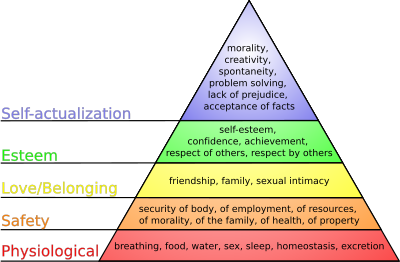
While he's ramping down from his former day job at Microsoft, Mr. Gates will shift his efforts so that he will be spending only one day a week at MS and the bulk of the rest of his time at the Bill and Melinda Gates Foundation, which focuses on eradicating poverty, illiteracy and diseases such as TB and malaria. And having traveled and consulted in malaria and AIDS riddled parts of southern Africa, I can tell you this: Maslow was right when he said that higher order needs become subsumed by efforts to handle lower order, hide-bound safety needs.

Africa and other parts of the developing world will simply not be able to add their unique contributions to the world if the people have to keep burying their children.

For all the promise and challenge of Mr. Gates' tenure at the helm of Microsoft, his has been a story of vision and passion.

Friday, January 11, 2008

A Soldier's Final Blog Post

This is one blog post that left me very, very, terribly sad, thinking about the other solidiers who've done the same--even my brother, who shares the same, delightfully oddball references as Andy and who could have written a post like this while serving in Iraq 1. Having said all that, I can say I also laughed like a goon when I read it.

Major Andrew Olmstead, who was re-deployed to Iraq, was the first US soldier killed in 2008--struck by a sniper's bullet. Before leaving for Iraq, he prevailed upon a friend, Hillary Bok, to post this, his final blog entry in the event of his death. She cried when she read it months ago, and, like a good friend, she posed it on 4 January, the day of his death. Be sure to listen to her conversation with NPR's Madeleine Brand.

It contains --no. I'm not going to even try to comment on what he wrote. That would be weird, like the gold leafed roses you can get at Sybaris--completely unnecessary.

January 04, 2008

Final Post

"I am leaving this message for you because it appears I must leave sooner than I intended. I would have preferred to say this in person, but since I cannot, let me say it here."
G'Kar, Babylon 5

"Only the dead have seen the end of war."
Plato
*

This is an entry I would have preferred not to have published, but there are limits to what we can control in life, and apparently I have passed one of those limits. And so, like G'Kar, I must say here what I would much prefer to say in person. I want to thank hilzoy for putting it up for me. It's not easy asking anyone to do something for you in the event of your death, and it is a testament to her quality that she didn't hesitate to accept the charge. As with many bloggers, I have a disgustingly large ego, and so I just couldn't bear the thought of not being able to have the last word if the need arose. Perhaps I take that further than most, I don't know. I hope so. It's frightening to think there are many people as neurotic as I am in the world. In any case, since I won't get another chance to say what I think, I wanted to take advantage of this opportunity. Such as it is.

Greg the Bunny, cover art from DVD"When some people die, it's time to be sad. But when other people die, like really evil people, or the Irish, it's time to celebrate."
Jimmy Bender, "Greg the Bunny"

"And maybe now it's your turn
To die kicking some ass."
Freedom Isn't Free,
Team America

Be sure to read the rest...

Goodbye Andy.

Cross-posted at the American Values Alliance or read what others posted on

Monday, June 18, 2007

The Future of Coaching? What Future!

Oh, Lordy! I've been chatting with Jonn, a friend and fellow consulting professional, on the future of the coaching profession. He was wanting to know where I thought this industry was going to go.

Truth is: I'm not a real fan of the coaching industry, as it currently sits. There is little agreement on the skills and training that makes up a coach; the skill set is interdisciplinary and still the accrediting bodies want you to take coach-specific training (huh?), so people take whatever courses are available just to get or keep their accreditation and not to build their skills; and the name "coach" cannot be branded (like "realtor"), so anyone can refer to themselves by that moniker. The coach training organizations are making their money teaching skills, but tend to have little to offer in terms of setting up your firm, so the failure rate hovers at upwards of 96% in the first year!

I used to teach principles of coaching at NYU and coach skills training for another international company. The students were an interesting lot, some seeking to learn about themselves, some looking to make a career change and others, well, they could have told me a hundred times and I still don't get what they were in there for. True to my earlier statement, years later, they weren't making any money or any difference for the people they wanted to impact.

A few years ago, I saw this episode of Penn & Teller's Bullshit--a brilliant riff on the coaching industry. How did I laugh? Like a goon!

Penn and Teller's Bullshit Episode on Life Coaching (part 1 of 3)


Penn and Teller's Bullshit Episode on Life Coaching (part 2 of 3)


Penn and Teller's Bullshit Episode on Life Coaching (part 3 of 3)


Wednesday, June 13, 2007

Indiana Advisory Group's Women's Leadership Series: Collaborate and Win!

First, thanks to Mike McGlothlin for the kind invitation to be with you and to you for your warm welcome. I appreciate your attention and your interest in the subject matter. We had a great conversation and, in the interests of keeping that conversation, going, I offer this online space for you to continue challenging and sharing with each other.

Keep collaborating!

I'm providing this blog entry as a reference point for your questions and comments--particularly on how you're attempting to apply what you've learned. Further, if you find additional resources you'd like to share, you may do so here.

Also, if you find others who would like to hear elements of my talk, please let me know. I'd be happy to meet with other groups.

Cheers,
Lalita