Showing posts with label leadership. Show all posts

Friday, April 10, 2009

Biz Failure and The "Rashomon Effect": Bring Out the Pies!

My "little" brother (6'2" and 225 lbs) is a constable on patrol (actually, now a Sargent responsible for training and development) in our home town. Talking with him one day about how people process information, he remarked that sometimes the most challenging thing an officer could encounter is an crime scene with several witnesses, each with their own point of view on what "really happened."

I think about that long-ago conversation, sometimes, when speaking with management and leadership teams. Their take on what went wrong and what caused it can, at first, sound quite a bit like the wind-up for a Three Stooges pie fight...only without the pies.
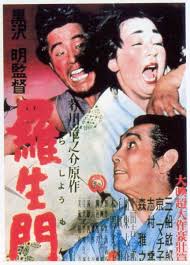


Like the "Rashomon Effect" Perry and I were talking about (based on the amazing Kurosawa movie--think CSI: Feudal Japan in which people posit plausible, but differing accounts of events), blame-shifting and the regrettable inability to parse "what's so" based on the limits of perspective can surely hamstring a team looking to make a quick shift.

See how nicely I said that?

Even more troubling is the tendency of people to cling to their account of events...all the way to the bitter, hopeless (pieless) end.

  • It was those people HR hired!
  • If accounting could have given us better numbers...
  • The IT people can't program worth a damn!
  • I blame Bush, the economy, the Chinese, global warming.
  • (in sotto voce: it was the CEO's fault!)

What's powerful is the realization that no one "owns" The Truth (said with gravitas)--not even the CEO, who only knows what he or she sees...and little of that with absolute certainty. Even more powerful is the ability to put together a "workable truth" with enough facts with which to make decisions and enough flexibility to quickly shift as more information becomes available.

Monday, March 30, 2009

Chrysler Head to Resign While Chrysler Urged to Take Fiat Deal

In a move that may just be window-dressing, the White House has urged GM CEO Rick Wagoner to resign and Chrysler to take a proffered deal with Italian auto maker Fiat in order to receive any additional bailout bucks. This from the New York Times:

The decision to ask G.M.’s chairman and chief executive, Rick Wagoner, to resign caught Detroit and Washington by surprise, and it underscored the Obama administration’s determination to keep a tight rein on the companies it is bailing out — a level of government involvement in business perhaps not seen since the Great Depression.
With Mr. Wagoner having been at the helm for almost a decade, it's clear that he's had ample opportunity to shape the thinking of other executives at GM--his thinking is part of their "DNA." What I find troubling is that there is no mention of the organizational change effort needed to re-shape their thinking (or, failing that, the need for additional blood-letting).

I'm certainly going to keep watching as the dismantling of the old leadership paradigm further disintegrates.

Friday, July 25, 2008

Randy Pausch, Author of "The Last Lecture," Has Died at 47

Randy Pausch, Carnegie Mellon professor of computer science died today of pancreatic cancer at 47. He died in Virginia, having insisted on moving so that his wife and children could be closer to beloved family members after his death.

His academic achievements are many--he was co-founder with Don Marinelli, of Carnegie Mellon's Entertainment Technology Center and started the Building Virtual World course which he taught for a decade. He was a National Science Foundation Presidential Young Investigator and a Lilly Foundation Teaching Fellow and did sabbaticals at Walt Disney Imagineering and Electronic Arts. He authored or co-authored five books, including the book, The Last Lecture; over 70 articles and was the founder of the Alice software project. He topped the list of the World's Top-100 Most Influential People (Time magazine).

Aside from his academic credentials, his relationship with his wife, Jai, and his children, his other crowning achievement was his entry for Carnegie Mellon's Last Lecture series, "Last Lecture: Really Achieving Your Childhood Dreams." In August, 2006, he was diagnosed with pancreatic cancer, a mean-spirited disease that is both pitiless and merciless as it eats up the life of the person afflicted with it. By August, 2007, he was told that it had mestastisized and that his time was short. Instead of putting his affairs in order and going on his last vacation, he went to the classroom. Here's his lecture.

Watch it, get your hands on the book, plaster on a broad smile about the beauty of your dreams and then get to work.

Some of my fave nuggets from The Last Lecture:
  • "The brick walls are there for a reason. The brick walls are not there to keep us out; the brick walls are there to give us a chance to show how badly we want something. The brick walls are there to stop the people who don't want it badly enough. They are there to stop the OTHER people!" — from The Last Lecture
  • "...when you see yourself doing something badly and nobody's bothering you to tell you anymore, that's a very bad place to be. Your critics are the ones telling you they still love you and care." — from The Last Lecture
  • "Experience is what you get when you didn't get what you wanted." — from The Last Lecture
  • "It's not about how to achieve your dreams, it's all about leading your life. If you lead your life in a right way, karma will take care of itself. And dreams will come to you." — from The Last Lecture
  • "We're not going to talk about spirituality and religion. Although I will tell you that I have experienced a deathbed conversion. I just bought a Macintosh." — from The Last Lecture
  • We cannot change the card we are dealt, just how we play the hand." from The Last Lecture

Tuesday, July 15, 2008

GM CEO Promises to Restructure to Improve Company for the Long Haul. I Hope He Means It.

This morning on NPR, I heard a report from GM CEO, Rick Wagoner. GM is restructuring to try to react to tightening market conditions. Last month, the auto manufacturer announced that it was shuttering 4 assembly plants and selling off or retiring many of its truck divisions including the Hummer brand. Today, they announced that they are trying to generate over $10 BB US through cost-cutting measures that include a 20% reduction in its 40,000-strong salaried workforce and the dramatic scaling back of salaried retiree healthcare benefits.

Wagoner admitted to trying to move the company into a position where it could do more than survive the current economic downturn (though this was an immediate and tantamount concern). He also discussed wanting to position the company (through RIFs and other cost-saving measures) so that it could move quickly and decisively when conditions began showing signs of improvement. This last bit was what struck me from the interview. Given the fact that the downturn coincided with the emerging move to cap greenhouse gases and reduce the proliferation of “petrol pigs,” Wagoner was right to want to use this unfortunate time on our economic landscape to advance the company.

You can listen to the report here. You can also go to the main link (if the one provided doesn’t open up the report).

Friday, June 13, 2008

NBC Luminary, Tim Russert, Dies at 58

Tim Russert with his trademark whiteboardGarland and I turned on the TV, just to start catching up with the day's news when we learned that NBC journalist and political bright light, Tim Russert, had just died. Mr. Russert was the host of "Meet the Press" and a news executive who ran the Washington Bureau. He was at is office when he succumbed.

He loved politics as well as public policy and he was interested in everything. An astute interviewer, he was known to pin his guests down to get to the root of the topic as it impacted the life of the nation or our society. Courteous and genuinely kind, he brought something useful as well as interesting. Mr. Russert was the premier interviewer in television news.

He was one of Time's 100 Most Influencial People for 2008. I can't agree more. It was from Meet the Press as well as NPR that I learned to love the news. He cause me to move from skeptical to more thoughtful about the news. He knew he'd hit the lottery in life and he wanted to share his winnings with us.

Here's Mr. Russert's last go at Meet the Press before leaving for his last vacation with his beloved family. Classic Russert.

Thursday, June 12, 2008

Tornado Kills Four at Iowa Boy Scout Camp

In this morning's news, I watched a report on the aftermath of a Tornado that killed four at an Iowa Boy Scout camp. Over 40 were injured. I watched one boy, an older Scout, speak of radioing into his Scout leader to figure out what to do and how he ran to offer first aid and support to those who were injured and offered to help with the recovery of bodies from a flattened shelter.

I watched in horror and admiration.

I used to be a Girl Scout Executive at a council just north of here and one of my biggest fears involved exactly this--a storm in the midst of the night, with a camp (Talitha or Sycamore) full of girls, the phones out and....

OK. You get the picture.

In all the things we hear about our children--obesity, sullen anger and disrespect, low test scores, fearful futures--I'm heartened to hear about children who are everything we hope for.

Cross-posted at the American Values Alliance

Friday, April 18, 2008

LNB #051: The Dip (Thanks, Seth)

Marketing guru, Seth Godin's book, The Dip, forms the basis for this podcast (and several more to come). Seth describes three key conditions when we get stopped:

  • The dip: where the break in your action is so deep and wide that you can't move out of it with the resources you're expending. Kind of like the straight-A highschooler who never really had to expend herself...until she got a snootful of Calculus 115.
  • The cul de sac (or dead-end): staying here will keep you from doing something that will work for you and it will never, ever change. His suggestion? Get out as quickly as possible. Remember, the analogy of the kid on the Big Wheel? It was cute the first few times around, and then it never seemed to stop.
  • The cliff: you can keep this going for quite a while, but it runs out of gas and leaves you on the side of the road with no options. Kind of like smoking, that doesn't seem to really hurt anything--that is, until the doc gives you That Look, you know the one.

Be sure to grab a copy of this little book, The Dip: A Little Book That Teaches You When to Quit (and When to Stick). I'll be chatting about it for a few more 'casts.

Listen Now: 20:23

MP3 File

Thursday, April 17, 2008

I'm Too Sexy for this Work!

I saw this on Seth Godin's blog:

You can't hire that guy because he's not as good looking as George (Clooney). And you can't believe that speaker because he doesn't present as well as George. And that guy? He's short. Short? Well, shorter than George. And you can't trust him to make good decisions because his skin is much darker than George's.

You can't date her because she's not as good looking as Jennifer (whichever Jennifer you want to set as the standard). And her? Well, she stutters, and Jennifer doesn't. And Jennifer herself, of course, is not nearly as smart as George.

Jennifer and George may be extraordinarily good looking movie stars, but you don't get to work with them. By buying into a standard of expectation for what's normal (or great or very good or trustworthy) we shortchange ourselves every single day. (Read the rest)

Seth's right. Back in my HR days, I remember reps clearly making decisions on which resume to put on the top of the pile based in such (illegal) banalities as "He's cute" or "Her name sounds nice." That, by the way, is when my hair really started turning prematurely white. Seeking to draft an AA/EEO program to help "deal with this," I went to work gathering research on looks and expectations, the positive and negative Pygmalion Effects, and such.

Here's where I found myself scratching my noggin: Studies showed that CEO's were between 45 and 55, were traditionally good looking, worked out regularly, were heterosexually married to a pretty wife. More than their education or past experience, the researchers found that their presumed attractiveness was more of a constant. Their ability to succeed was, in part, predicated on the expectation that pretty people did well. Around that same time, where was a rash of CEO flameouts where they fell to earth like comets. Their good looks bought them all kinds of space, but didn't change gravity then they became less than lighter-than-air.

Remember the horribly ubiquitous Right Said Fred song, "I'm Too Sexy?" a novelty hit that was so successful, that they re-released it in 2007 (could Mac Daddy, Macarena II be far behind?). That, it seems, is quite a bit of what can be seen at networking events, as people, oddly, preen and stut their looks rather than their other...um, wares.


Thursday, February 14, 2008

Is the Barack Obama campaign sparking meaningful conversation about leadership?

I just heard from a friend (fellow LinkedInnie, Ray Miller) who recently attended a Barack Obama event in Ohio. He found himself blown away by what he experienced: a group of people of every strip, galvanized under a shared vision, masterfully delivered.

His telling of the events got me thinking--not about the politics of it, but about what seems to be a deeper conversation in the marketplace of ideas...and ideals.

The Democratic campaign has essentially, if nothing else, set skilled, competent management against vision and ideals. Now, I know this is a gross simplification, but follow me a bit further.

People seem far less interested in Senator Obama's particulars than they are in his ability to inspire them about themselves, their country and their future. He strikes me like a Sir Rickie Branson (who, like Obama, doesn't stand on the particulars: he can't even read a balance sheet). People will follow him anywhere, leaving his cadre of skilled minions to fulfill on that vision and ensure that they all get there.

Here's what I'm interested in finding out: Has Barack Obama's campaign shifted the conversation about leadership? Are you noticing an increase in conversations about vision in your work?

Are people talking more about what's possible than about what's probable or likely?

Thanks for looking with me.

Chime in here or at

Thursday, January 10, 2008

Are we a little too sensitive these days?

I spent a number of years leading diversity and anti-harassment trainings (back as far as the 1980's) and used to be an AA/EEO officer. As a woman and ethnic minority, I was a fearsome thing; let me tell you, though my views were much more moderate than people, on first glance, thought.

I'm now of the opinion that "sensitivity training" has left people, well, sensitive. Whites and men seem to have shifted from blatant, though mostly unintentional, bigotry to tiptoeing around on eggshells. It's this tendency to try to "look good" (See? I'm cool.) and not be accused of being a ___insert your poison here___ that, I think is getting in the way of being authentic and building solid workplace relationships. I’m not sure whether we have the stones to clash with each other over projects so we can find that “shining spark of innovation.” I’ve also seen instance after instance where men, fearing even the possibility of an accusation of harassment, refuse to meet with women over lunch or at closed door meetings. Losing our ability to share tacit knowledge assets (like the things a mentor pulls you aside to tell you...the kind of inside dope that helps you find resources, approach people more effectively and, hell, get things done), to my mind, is an untenable loss in the workplace.

What do you think (your experience and opinions are welcome here) and, better yet, what do you think will turn the tide here?

Thanks for weighing in on this question, which I've been thinking about for some time now. I’m looking forward to some juicy and productive discussion.

You can chime in here or read what others posted on

Sunday, September 02, 2007

Authentic Leaders--Who Are They?

It's no surprise that I'm committed to seeing Africa move from requiring aid to active participation in trade. I just don't think it will happen if we train African leaders to be good little copies of Euro-centric styles of leadership. I think a cut of this is the complaint many have of Hillary Clinton: they think that she's succeeded to well in being the best little shark in the water. On one televised focus group, one women commented on the possibility of a Hillary Clinton Whitehouse. Another woman replied that she might gain the Whitehouse, but that it wouldn't mean that there would be a woman in that seat of power.

While I was in Namibia, I got to meet extensively with several leaders in the Namibian government, most of whom were Western educated (their families got them out of the country in part to help them survive the worst of the upheaval connected with the death throes of apartheid). I found myself more than a little worried that they seemed to be adopting the best (and the worst) of our leadership styles. For instance, while women were making inroads in public service, the halls of Corporate Namibia looked like ours: from the year 1980.

Yup, troubling.

In this TED talk, Patrick Awuah discusses failures in leadership that he believes are connected to a failure to train leaders. He left a great gig in Seattle to start a liberal arts college in Ghana. He succeeded in imbuing them with ethical quick-thinking and idealism.


Ray asked a great question in the LinkedIn Q&A: Who do you see as authentic leaders? Here's the text of his question...

I think it is easy to pick out leaders from the past who made an impact, like Gandhi, Marting Luther King, Malcolm X, Abraham Lincoln, Martin Luther, Niels Bohr, Einstein..... Who do you see as historic leaders, local or on the world stage? and today? who do you see as authentic leaders, again local and global?
Be sure you post your responses there or here.