Friday, February 13, 2009

Starbucks Nixes Fixing Decaf after Noon

If you're like me, you spend a fair bit of time at SBX for business networking, relaxed client meetings or to "change your air" while working on a deadline. So, I was surprised to see that Starbucks felt if necessary to stop preparing pots of brewed decaf in the afternoons. Seems that tossing the unused brew when it's a ripe 30 minutes old was getting costly.

Wednesday, January 21, 2009

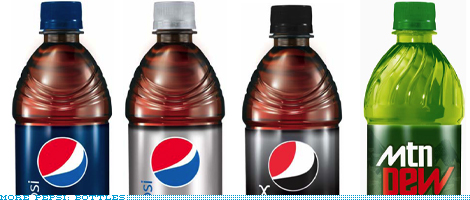
On Pepsi's New Branding....

Pepsi Bottles


I can see why so many people dislike the new Pepsi logo. Yes, I too
quivered when I first saw it. Yup they are famous for constantly
changing their branding and all that but a lot of the argument I think
needs to go deeper. Pepsico knew this backlash would happen. They knew the new design would not bode well with a wide swath of their drinkers but the “what” is not the question, it’s the why.


After taking a long hard look at the logo my guess for why they did it is this.


Yes there will be heavy online buzz (including this post) but this logo was not designed for the NOW,
it was designed for the future. Current context is not it’s focus. This
logo was designed for a future zeitgeist. A theme, a style, a mode of
thinking…not yet popular. When a company of the size of Pepsico
redesigns their branding as often as they do, they have come up with a
design that is projected from their future to the now. it cannot be
defined by not current tastes.


They do this not just for design longevity’s sake, but also
packaging purposes. If this new branding is to carry them through the
next 10, 15 or 20 years it allows them to project packaging costs much
better. For a company the size of Pepsico these projections can make or break their bottom line.


Think about it.


If they design a logo that is more concurrent with today’s
design language or thinking and it gets stale in 3 - 5 years, that is
going to be millions of dollars lost
for the company’s that
produce their packaging, and in turn Pepsico, because it will represent
a massive retooling for these guys because of the sheer volume of
printing and production that goes into the packaging process. So for
me, that is the why. The design will slowly grow on us and it will soon
seem ahead of it’s time….. no I take that back. That’s probably what
the Pepsico board is betting on.

Friday, January 16, 2009

Beauty all around

At the falls in a Tennessee state park.

This message was sent using the Picture and Video Messaging service from Verizon Wireless!

To learn how you can snap pictures and capture videos with your wireless phone visit www.verizonwireless.com/picture.

Note: To play video messages sent to email, QuickTime� 6.5 or higher is required.

Monday, December 15, 2008

"Trouble Don't Last Always": Mother Wit for Tough Marketing Times

Erik Deckers over on Twitter shared this link with me earlier today. Here's a taste of the article (a quick and good read):


Good news for marketing agencies, printers, and direct mail companies from B2B Marketing magazine. According to their “exclusive” survey, only 25% of all business-to-business marketers are going to cut their budget. But nearly one-third of them are actually increasing their marketing budget, while another 44% are leaving them intact. That’s good news for anyone in TV and radio advertising, digital marketing/advertising, and, of course, direct mail.

As I’ve been speaking to other marketing professionals around Indianapolis, they’ve all been saying the same thing: marketing spending is staying flat or increasing.

Increasing? In a down economy? Absolutely.

That may seem counterintuitive to some, especially the bean counters, but spending more on marketing now is smart. That’s because the 25% of marketers cutting their spending are your competitors. They’re hiding with their heads in the sand, which means their message isn’t reaching customers, which means customers aren’t buying, which means income is shrinking, so they bury their heads a little further. (Read on)

Here's what I offered as a comment:

Right on! I'd also add R&D and strategic planning. Here's why.

My Great Grandmomma was a woman from the American South who came North to escape the oppression of Jim Crow and find economic opportunity. Not educated past the 6th grade, she was filled with what the old folks used to call "Mother Wit," a kind of smarts that can't be taught in school. Momma Lena would look at the times we're now living in and remind me that "Trouble don't last always." She'd tell me to do everything I could to get ready for my blessing, adding "be ready to be found." That last bit was in her attempt to get me married off (Momma Lena, my Hubs is a marvel and I'm sorry you never got to meet).

Now, my spiritual path is one that this church-going lady would scratch her noggin hard over (I call myself a BaptiBuddhist Yogini), but her message keeps ringing in my head as I talk with fearful clients.

But, I digress: This won't last.

If we continue to freeze our spending completely, when the clouds pass, we'll be left in the ditch...by those companies that invested in (wait for it...wait for it...) marketing, R&D and strategic planning.

We see examples of firms that invested deeply even when they didn't have the sales figures to back up that investment.

A few years ago, when Apple's sales were sluggish and their customers spoke hushed tones about the Apple gospel of "not a PC," they invested--mightily. They learned more about themselves, their customers and the market. They created new products there weren't even names (or desires) for yet. They studied trends and created a few of their own. They created knowledge centers and centers of learning for customers and employees. They crafted their message. They created communities and systems in which those communities could interact. They cemented their brand. They became evangelists.

Apple and many other companies have succeeded by not giving in to scarcity and fear, but this says more about their strong, adaptable culture than, perhaps, anything else. That company's marketing systems are built to flex. Having gone up against the Microsoft Machine since their inception, they're accustomed to being the underdog with far less in cash reserves than their Redmond-based cousin.

That means that they had to get smart in whole new ways. Having proven that they could build a brand, largely, by word of mouth, they used their Mother Wit to design marketing systems that grabbed the attention of their customers--both those present customers and those who would have never thought to buy anything from Apple. We all know people who own PC's and iPods or iPhones, or shop at the iTunes Music Store.

I do think, however, that spending the same money on the same things is a no-go. The markets are fluid, malleable things. During this downturn, companies can--and should--be taking a close look at their knowledge systems (training, R&D, etc.) for ways to beef-up knowledge sharing and folding new learnings into development. Companies can also be looking (as they should have been along) at who their customers are, what they want, how they want to get it and how they want to be interacted with.

In short, this downturn is a "teachable moment," speaking volumes about continuous improvement in marketing, communication, product design, planning and execution--all the systems that make up a company.

The statement in the post about nonprofits and not cutting marketing or mailings is pretty brilliant. The recent presidential campaign is a testament to the power of marketing and of the creation of new, flexible systems for communication of messages to customers (in the political sense, voters). These nonprofits (Obama, Clinton, McCain, Romney, etc. for President) told us quite a bit about scalable messages and scalable marketing systems. And let's not forget, while the Obama campaign was raising money by the semi-load in its last month, we had already been in a recession for the better part of a year!

Tuesday, December 09, 2008

Relationship 2.0

Web 2.0: The Architecture of Interaction
Web 2.0. It's a term we all know because, in fact, its existed along with the earliest elements of the World Wide Web, and includes social networking, co-creativity, collaboration and sharing. That means that social networking sites, wikis, blogs and other syndicated content were foretold in the creation of the Web.

Like Eric Schmidt famously said: "Don't fight the internet." Instead, he suggested using the power of the web as a platform for business and social interactions--an "architecture of interaction." That challenged me to use my website as more than just a web-based business brochure. And I've still got more north to go.

Relationship 1.0: Gaming the System
I love every single bit of electronic social networking with one caveat: I'm not sure if I'm all that interested in Web 2.0 if all we do is bring Relationship 1.0 to the party.

We all know the elements of Relationship 1.0. You can find them at every "networking event," for example, with people in a death match where the object is to (1) sell something to someone rather than connect, (2) figure out what can be gained rather than given and (3) promote a homunculus of oneself and never the authentic you. Extra points for having taken a class on smiling and handshakes (don't laugh, because they're out there). Then, dash home to add all those names to your newsletter mailing list and send out all of those "special offers" to buy your merchandise. If they didn't want you to send them endless stuff, they wouldn't have given you their digits. Right? Not according to the CAN SPAM Act (which arose because of internet abuses).

Trouble is: no one who goes to networking events goes looking to become your next customer. They went hoping you'd become their next customers. Trust me. I get to do my fair share of public speaking: I've asked.

Learn About You? I'd Have to Care
Twitter automation through services like Tweet Later are compounding the problem. Designed to help people manage their welcome and other tweets, these services are leading to some curious situations. For example, I routinely get welcome messages from other coaches asking me to join a teleclass or webinar or sign up for a free coaching session. I've been coaching for almost 18 years. Clearly they haven't read my bio. Now, I understand that having large numbers of followers, it can be tough to read the bios of every new follower, crafting a welcome message to each. And truth telling here: I use an automated welcome message service (I get sometimes 30 new followers a day and want to thank them for following). What i have found that works, is to click back through recent additions and sending a response to one of their more meaty tweets to let them know I'm listening. Also, I read profiles before I re-tweeet (forward a tweet) or reply the first time--just for context.

Follow Me, Follow You
There's quite a bit of strange controversy surrounding whether it is noblier in the web to follow people who follow you. Twitter notables like Guy Kawasaki suggest you're a lose if you don't. But that would mean, in Web 1.0 terms, that you would have been obliged to put everyone on a newsletter mailing list who put you on one. If Twitter users had to pay for the followers by level, there would be less of that nonsense going on. Like the book says, (they) just might not be into you. But that doesn't mean you can't be into them.

Relationship 2.0, then, is about the birds in the bush and not those in the hand--about connecting people to our connections. About paying the richness of our lives and relationships forward.

Think about it when you get (or give) that next self-serving tweet about that next business offer.

An Open Letter to Obama on Small Biz

Just sent off a happy gram to the good people at Change.gov about small business. Here's what I said:

Small business is the engine that drives the economy, but the government has had little real focus on small business development in years. Multiple heads of the SBA in the Bush Administration, little in terms of money and talent. Little commitment. Now, we see the erosion of small business and the very agency tasked to support business growth is struggling for its own survival.

If the SBA was a small business, they'd be having their own fire sale.

Here's my coaching for you: Transform the Small Business Administration and appoint a new Director--fast!

SBA Scope
The scope of the SBA is too broad to help all of the very diverse business needs: non-employee microenterprise small businesses (0 employees), microenterprise small busineese (1-10 staffers), small-small businesses (10 - 50 or 75), small companies (75 - 250 employees) and larger small businesses (250 - 500 people).

Right now, with very little resources and scant support, they are tasked with job creation. There's little time, energy or resources for anything else.

REQUESTS

SCOPE
Divide up the SBA into business support segments (as described above). Given the fact that there has been shrinkage among non-microenterprise small businesses (something like 12% over the past half dozen years and dramatic growth among microenterprise (especially non-employee micro-e businesses), where are some inescapable facts: we can't afford for these businesses to fail (and add more job seekers to the tightening job market) and these businesses fill an important role in America.

Create an office of microenterprise small business soon, lest these businesses disappear.

SCORE
While I am sympathetic to the plight of new businesses, I am also cognizant of the fact that with its reliance on SCORE rather than existing consultancies, the federal government has set itself up to compete with some of the very small businesses they are there to support.

Further, the SBA is training business leaders that the services of consultants should be cheap or free. They never learn that as their businesses grow, their needs for more advanced business consulting and support services grows as well.

HR
Finally, I find it shocking that the SBA does not offer specific HR services and consulting to the businesses they support. With all eyes on the meltdown over executive compensation, union wages and other weighty human resources matters, I can't help but wonder whether the SBA is enabling the next generation of businesses to overpay execs, exploit workers, and hobble themselves with comp and benefits decisions they should (1) never have made and (2) would have made differently with specific counsel.

Thanks for listening.
Best,
Lalita Amos, MRHM
Total Team Solutions, LLC

Tuesday, December 02, 2008

What the Hairy Heck?

I was still chewing on this blog post over a week after I first read it, so I thought I'd chew it over with you. In it, the author described the travails of a consultant who'd had his gig pulled right after he'd made the cross country move.

Michael Moses landed a job as a human-resources consultant in Chicago straight out of college. He moved to the Windy City from New York, signed an apartment lease and was ready to work. But then he got a call that more job hunters have been dreading—the company could no longer afford to hire him. ‘I was ready to go, and they just pulled the carpet out from under my feet,’ says Mr. Moses, who is 22 years old.
What bothered me about Mr. Moses' account of losing a job he actually started was the job he was being hired for. And while he doesn't mention what his degree was in, it stands to reason that at 22, it wasn't a Masters of Phd and that he didn't have the depth of experience most people think of when they think: consultant.

(sigh)

Hiring managers have to do a better job of considering talent. "Growing people" in a position seems like a smart idea, except when I consider that most companies are trying to get cheaper employees, hoping that they'll get the experience they need quickly. Besides, these workers, as Mr. Moses can attest to, are easily shed.

Our current job market shows a lot of daylight in this strategy.

Monday, December 01, 2008

OK, now this was a little bit of a brain burner even for me (and we all know how much I like my noggin scorched). I asked the Hubs out of a cheap Sunday night date--books, computers, Kindle and coffee. So, I'm a cheap date. I already knew that.

Anyway, the Starbucks was the now usual dichotomy--great service in a dirty store (with the nastiest stains on the upholstery). While there, I noticed that the 10 by 10 foot area rug in the center of the seating area  wasn't very securely tacked down along one edge. I noticed it--not because I was trying to strike up a conversation with it. I tripped over it. Every single time I walked to the counter or the restroom (I did say I was drinking java, didn't I?). I felt like less of a busted ballerina when I saw a cop trip over it on his way out the door.

Um, oops!

So, before I left, I thought I'd bring it to the attention of the shop keepers. Here's how that conversation went:

Me: Excuse me. I wanted to let you know that the carpet isn't secure on that one side (pointing) and that I and one of the cops had tripped over it.

He: Yeah, I know.

Me: I saw that you'd used some other kind of tape on it. A little double sided carpet tape would take care of it.

He: You saw we'd tried to fix it already (smiling tiredly--end of shift). We were going to get some electrical tape (!) but the store'd already closed.

Me: Electrical tape?

He: We can only buy from certain stores. Our DM said if the electrical tape doesn't work, for us to get what we needed from another place.

Me: Um, OK. Night.

Now, can you guess where my tiny mind went? A 2" by 36' roll of carpet tape costs about 10 bucks (I checked). Three trips to and from the store looking for electrical and every other kind of tape costs more than that in gas alone (let alone time away from the store on the clock). In addition, the store runs the risk of lawsuit if someone tripped, carrying a steaming cup of joe or a big cuppa tea, and splashed themselves (yipes!), someone else (crap!) or a little someone else--like one of the many Christmas-togged tykes getting hot chocolate with grandma (gonna roast in hell).

By looking to fulfill the letter of the store's purchasing agreement, it failed to meet another important standard: the standard of care with respect of customer and employee safety.

I find this kind of siloed thinking quite a bit in my practice with executives drilling the rules into the heads of their direct reports such that they miss opportunities for innovation, avenues to clear roadblocks and in this instance, chances to remedy safety concerns before an injury occurs.

It's the bane of the business world--the inability to get ahead of problems or opportunties before they run their predictable and almost certain course then reacting to events to mitigate the damage.

The Faith Friendly Workplace

I used to work for the world's largest producer of Bibles. Curiously, they're the same company that produced that Madonna Sex book book a few years back. There was a pervasive atmosphere of religiosity. But what there wasn't was tolerance (got to find a better word than this) for other faiths or faith traditions. Like the sometimes maligned Chick Fil-A which routinely probes applicants on their family status and religious beliefs and practices but has come under fire for limiting opportunities for those in the "wrong faiths" (like Catholicism or Judaism), companies which provide space for religious expression (as opposed to religious accommodation like foot washes for Muslim adherents) are being watched for signs that they have an express preference for some expression over another.

This article from Workforce has some great tips for a faith friendly workplace like this from GM "If you want your faith group to be in Ford’s Interfaith Alliance, you’ve got to support the ability of other groups to meet." Read on.

Tuesday, November 25, 2008

'If You Didn't Want My Newsletter, Why'd You Give Me Your Biz Card?"

BEGIN RANT

As I mentioned in my tweets, I was a speaker on a panel at Purdue. Wonderful program that connected minority and women-owned businesses with purchasing managers from Central and West-Central Indiana. Sure enough, after having dozens of business cards pressed into my hands (and passing out my share to people I'd like to stay in contact with), it's started: The unsolicited subscriptions to email newsletters.

In the old economy (pre-AOL/Compuserve/Netscape of the early 1990's), it wasn't inconceivable to get a paper and ink newsletter when someone got your business card. Back then in the pre-Can SPAM Act days, all one had to get was an address (which they could find in the phone book) and they were off to the races. Now, Can SPAM Act or no, people assume that if you give up that email address, you're asking--begging--to be added to their email list. Better yet, the really industrious ones think that selling their email mailing lists is what Martha Stewart would call "a good thing."

It isn't. If I get one of these, I get 10 and they don't just magically disappear by force of will.

I've maintained that networking (more aptly discussed as "prospecting with people who are uninterested in buying") as we've come to know it is such a bad idea. I routinely remove myself from those mailing lists...and toss the card of the offending biz person.

Better would be to ask how the person who gave out the card wants to be interacted with and then writing that on the back of the card. The chances of deepeming a relationshipo through relationship-appropriate communication is enhanced.

'If You Didn't Want My Newsletter, Why'd You Give Me Your Biz Card?"

Glad you asked. I thought you could keep it on file in case you met someone who could benefit from my services (or your associates, mine), that we could consider getting together to learn more about each others' businesses, that we might get together for tea to strategize ways in which we could both win (like a joint venture or other collaborative opportunity), that you might be interested in the free items on my website, that you might want to listen to my podcast and possibly appear on one, that you might use the biz card as a book mark...

Being added to your SPAM list was the last thing on my mind.

END RANT
(See? That wasn't too bad, was it?)

Monday, November 24, 2008

My Kindle Mentor--Found!


Now, before any of you smart alecs go off mumbling that I've got a Kindle habit, let me be the first to say it: Hi. My name's Lalita and I'm a Kind-a-holic. Garland's found me slumped on the couch in front of the fireplace, glasses askew, clutching my reader like a just-returned foundling.

It's a cautionary tale.

Though, I will say that I've met some very interesting people hereabouts. Kindle owners, all. Today, it was Patrick, the man who started my Kindle crush. Like any self-respecting crack dealer, he let me have a free taste. He handed his Kindle over to me--a stranger--at SBX and let me play with it for the better part of an hour while he checked his email. Seeing him today, we was beaming when he saw me walking back to my table with my Kindle, which I've named (in the Amazon system), Gizmo (food and water--bad!).

He was with two friends, non-believers, to be sure, and leaned into me to tell me about all of the Kindle loot he'd gotten and still coveted. When he got to the subject of Kindle covers (he's got 3 or 4), he remarked to me, a fellow conspirator, that he "could see how women can get that way about purses.

And the bridges of understanding get stronger.

Friends have asked me to post a little about what I'm reading on my Kindle. Here's the short list: 

Books


Newspapers:
Blogs:
...and there was peace on Earth.

Monday Morning Melodies

I'm hanging at SBX, getting some writing done while I wait for the afternoon meetings to commence. It's a glorious day--misty and fit for fireplaces, chili and pots of tea (can you tell I'm feeling a little peckish). Keeping me company--my trusty Sirius radio. Listening to Alex Bennett (Sirius Left) and an otherworldly discussion on the merits of Michelle Obama's badonka donk, they redeemed themselves by playing some acoustic Amy Winehouse.


In spite of--or sadly, because of--her much-storied personal struggles, she still ranks up there as one of the singular talents of her day. My fear is that, like Billy Holiday, she'll be gone too soon. Still, when I listen to her sing, I think about my mother, who, though still at the beginnings of her life as a woman, loved Billy's ageless voice. Here's a sample:


Beneath their personal dramas that played/are playing out in the tabloids, these women suggest a vital link to my business life: Each in her own way, they crafted their own, singular sound...and sang it. Looking forward to next year and the current climate of fear and scarcity that abounds, I'm struck by the opportunity to, like them, further explore my singular sound--really find it--and sing it to those people whose ears are attuned to listen.

The work of working and living "Like Nobody's Business" isn't as easy as it might seem.

Saturday, November 22, 2008

How Obama tapped into social networks’ power

Like a lot of Web innovators, the Obama campaign did not invent
anything completely new. Instead, by bolting together social networking
applications under the banner of a movement, they created an unforeseen
force to raise money, organize locally, fight smear campaigns and get
out the vote that helped them topple the Clinton machine and then John McCain and the Republicans.


As
a result, when he arrives at 1600 Pennsylvania, Mr. Obama will have not
just a political base, but a database, millions of names of supporters
who can be engaged almost instantly. And there’s every reason to
believe that he will use the network not just to campaign, but to
govern. ...

Monday, November 17, 2008

First the Smokes and Now His Blackberry: Obama to Go Cold Turkey

I shifted to a smart-enough phone from my Kyocera Palm-based smart phone a year or two ago and almost experienced projectile vomiting, shuddering and sweating--and that was just in walking into my local Wireless Toyz store to talk with them about the possibility of a switch.

President-Elect Obama, for security and other reasons, will more than likely need to let the Blackberry go. I wish him luck.. Oh, and a mop and bucket.

Wednesday, November 12, 2008

Miriam Makeba, Mama Afrika (a tribute)

I was very small when I first heard Miriam Makeba. I'd come downstairs early one morning to see my mother putting on some music to jam to while cooking, cleaning and doing laundry. Momma danced through the house all day and when I asked her what the songs meant, she said she'd gotten the records from Sophia, a South African student who was studying at Purdue, just across the river. We'd ask her next time we saw her.

Sophia was like nothing and no one I'd ever seen--she was tall (or so she seemed to me at 8), mahogany, had a melodious accent, wore thread and beads in her long hair and was a refugee. Since the 1960's the South African government had been rescinding the visas of traveling students and others. Effectively, she and the others in her little contingent, were exiles.

Sophia brought us Hugh Masekela and Miriam Makeba. Momma brought Sophia Herbie Hancock and Miles Davis. What an exchange.

Our little house in that newly-integrated neighborhood (that would be us) was filled with people, music and foods from around the world.

Though it was that day I spent with Sophie--she was teaching Momma how to do my hair South-African style (in little semi-rural Lafayette, Indiana!) that I found out what Ms. Makeba was singing about. Her songs were about rural life there. They were about the evils of apartheid. They were about a deep love of Africa...about Zulu life. Sophia would say "here, she's saying 'Momma hurry. Don't let the Afrikaner police catch you!'' and "here she's singing a wedding song. Can you say the letter ! (the symbol for the click)." And my mother would pass her more beads and thread.

Ms. Makeba has suffered greatly before and during her exile. Before leaving South Africa, she and her band mates had been in a terrible accident with another car. The emergency medical personnel only helped the whites. Ms. Makeba's Black South African friends were left to die on the side of the road.

Human road kill.

Years later, she would return to South Africa a heroine. Nelson Mandela persuaded her to return after his release. He wrote this, in part, of her passing.

Her haunting melodies gave voice to the pain of exile and dislocation which she felt for 31 long years.

At the same time, her music inspired a powerful sense of hope in all of us. (read the rest)

So, when I heard that Ms. Makeba died on Monday while singing in Italy, I pushed back my desk chair and listened quietly to the retrospective on her life. And remembered...dancing through Momma's kitchen, singing songs a far away woman had taught me to sing, with beads clicking in my hair.

Kindle Tweets

...and no, I'm not talking about stale Halloween candy.

But here's a nifty new Kindle trick: Tweeting. I've figured out how to post tweets using my Amazon Kindle (which is relieving the premature curvature of my spine for all the biz books, magazines and HR, OD and brain/behavior journals I was lugging around like a Sherpa). Using the experimental functions, I created a bookmark for twitter and sign in. Then, I just posted as usual.

Circuit City Short-Circuits

As many of you know, I love technology--the smaller the better. Oh, and pens (mmm, pens...), but I digress. So it should come as no surprise that some of my early dates with Garland, my fabu-hubs, were to Best Buy, Comp USA, Office Depot and the like.

Better than dinner and the movies. Yeah, Garland got off cheap.

So, I hate it when a tech retailer struggles. I also hate it when that bad feeling I have about a business turns out to be right. Circuit City, never a personal fave (and, people get this: I'm pretty catholic in my tech retail tastes...just give me stuff to covet) announced last Wednesday that “it will immediately close and liquidate 155 stores and lay off thousands of employees as it struggles to survive an increasingly dreary holiday shopping season” (read the rest of the WSJ story here).

Circuit City, the nations second-largest electronics retailer assured investors that it won't be closing, but that it “planned to reduce about 17 percent of its domestic work force, and slash operating, payroll and marketing expenses. Circuit City currently operates 721 stores and outlets in the U.S. as well as 770 mostly smaller locations in Canada, and employs roughly 55,000 workers including holiday help.”

I'll say it: Yipes! CC’s PR plate twirlers have got their work cut out for themselves in spinning this as one of those Martha Stewart "good things" in advance of the lucrative holiday shopping season. Second thought, with K-Mart ramping up a "buy lay-away" campaign (Lay-away is something I remember from my childhood...when we were poor) and Wal-Mart expecting banner sales, they may have seen the writing on the wall in choosing to weigh anchor and run.

In a (begin snark) brilliant move (end snark) to cut costs, CEO Philip J. Schoonover, thinking that floor sales in his company was something a trained chimp could do, decided to cut jobs--starting with his most senior, most experienced (read: most expensive) workers, leaving the stores to be operated by demoralized, dispirited, underpaid workers who were waiting for the next axe to fall (they didn't have to wait all that long).

Dumb. No, shortsighted and dumb.

The market's immediate response to the 3,400 employee restructuring? Customer defections due to poor customer service (that was me) with falling earnings for dessert. Here's my question: while Schoonover was making HR policy willy-nilly, where the sweet hell was his Chief HR Officer? This from the Circuit City website:

Mr. Jonas joined the company in 1998 as director of associate relations. He was promoted to assistant vice president of corporate human resources services in 2000, was elected vice president in 2003 and was elected senior vice president in 2004. Prior to joining the company, he was employed by Toys "R" Us, a worldwide retailer of toys, baby products and children's apparel, from 1985 until 1998, including serving in the position of director of human resources for the Babies "R" Us division from 1996 to 1998.

Seems like a skilled enough kind of guy, but what in the name of the Great Pumpkin would have had Schoonover make such a sweeping HR decision, seemingly, without consultation with (and, well, the cooperation of) his top HR pick. This seems to be the issue.

After the early successes of Jack Welch at GE with his Pareto Principle-based rank and yank mandate (the top 10% get raises, the bottom 20% get pink slips and the 70% in the middle get a continued paycheck), CEO's who had never spend so much as a week in the HR trenches began making sweeping HR decisions--decisions based on corporate earnings and not based on human capital management (got to find another term for that). Curiously, no one said a word when, at GE, the people in the middle began leaving in droves taking their knowledge assets with them, worried that the bottom of the barrel was rising fast, and the remaining staffers, fearful of collaborations with team members who could supplant then, began hoarding information and sabotaging one another. Morale is strangely low there and it’s only the high prestige and perks that keep people in the saddle.

HR leaders like the strangely silent Mr. Jonas could do well to smack their Chief Execs on the side of the noggin, yelling "wake up, stupid!" until they get their attention. Then they should point to the business plan and demand how the hairy hell the company is expected to reach those heights when CEO expectations for the HR function are so low. But, aw shucks, you can't be a champion of solid, far-reaching, business-focused people strategy if you're cravenly trying to protect your job.

Here's a home truth: Business plan minus well-trained, confident contributors equals an interesting idea. CEO’s with said interesting ideas should be shortlisted for re-deployment… maybe on the shop floor at Circuit City.

But, I have to say that we, in the HR field, have done this to ourselves. We’ve settled for MBA programs that don’t teach the value of a solid HR function (which includes guardianship, visionary, strategic, operational and tactical elements–not just the tactical), MRHM programs that don’t teach future leaders to scrap for a seat at the table (and one where they aren’t taking notes or arranging the coffee service) and a professional organization, SHRM, that is more worried about building its brand and stuffing its membership coffers than in building the profession in the minds of CEO’s and HR leaders alike.

But, sadly, what’s predictable and almost certain is that around the corner will come another CEO with his six shooter (ammunition: cut, cut, cut, cut, cut, cut) backed by a simple minded CHRO who will cower to keep his gig.

Thursday, October 16, 2008

Great Quote...

In these times of economic uncertainty, this timeless quote from Architect Frank Lloyd Wright is quite timely....


From my Real Simple Quotes newsletter

Daily Thoughtbegin quoteI know the price of success: dedication, hard work, and an unremitting devotion to the things you want to see happen.end quote

-Frank Lloyd Wright


Tuesday, October 14, 2008

Graduation Swag: My Shiny, New Kindle is Siphoning Money Outta My Wallet!


In a small torrent of graduation swag, I was recently gifted by my family with a Kindle. Glorious! I just checked my poliblog for new action-lots-and have been busy on the Kindle portal lining up books to buy. Now, I could lie and say I was checking out the newest tome on brain behavior or human habits and thinking, but I'm getting the next Anita Blake, Vampire Hunter installment.

Life is completely grand!

This message was sent using the Picture and Video Messaging service from Verizon Wireless!
To learn how you can snap pictures and capture videos with your wireless phone visit www.verizonwireless.com/picture.

To play video messages sent to email, QuickTime� 6.5 or higher is required. Visit www.apple.com/quicktime/download to download the free player or upgrade your existing QuickTime� Player. Note: During the download process when asked to choose an installation type (Minimum, Recommended or Custom), select Minimum for faster download.

Need a Different Secretary...


OK. I'm officially back from vaycay. Here's my unofficial secretary editing my most-recent document. It's not the poor typing skills I worry about (her last document was 27 pages of the letter "A" -- it's the attitude problem I find worrisome.

This message was sent using the Picture and Video Messaging service from Verizon Wireless!
To learn how you can snap pictures and capture videos with your wireless phone visit www.verizonwireless.com/picture.

To play video messages sent to email, QuickTime� 6.5 or higher is required. Visit www.apple.com/quicktime/download to download the free player or upgrade your existing QuickTime� Player. Note: During the download process when asked to choose an installation type (Minimum, Recommended or Custom), select Minimum for faster download.